Rahmat Wibowo published Steven Nataniel Kodyat's reply to his somasi as a YouTube 'study case' of AI-written legal responses, declaring that by calling his post sarcasm Steven had admitted criminal intent and that 'Article 433 is already proven'
| ID | ev-20260722-001 |
|---|---|
| Source | Rahmat Wibowo YouTube |
| Modus operandi | Legal Threats and Extortion Manipulation of Public Opinion |
| Documents | doc-20260428-001 |
| Targets | Steven Nataniel Kodyat |
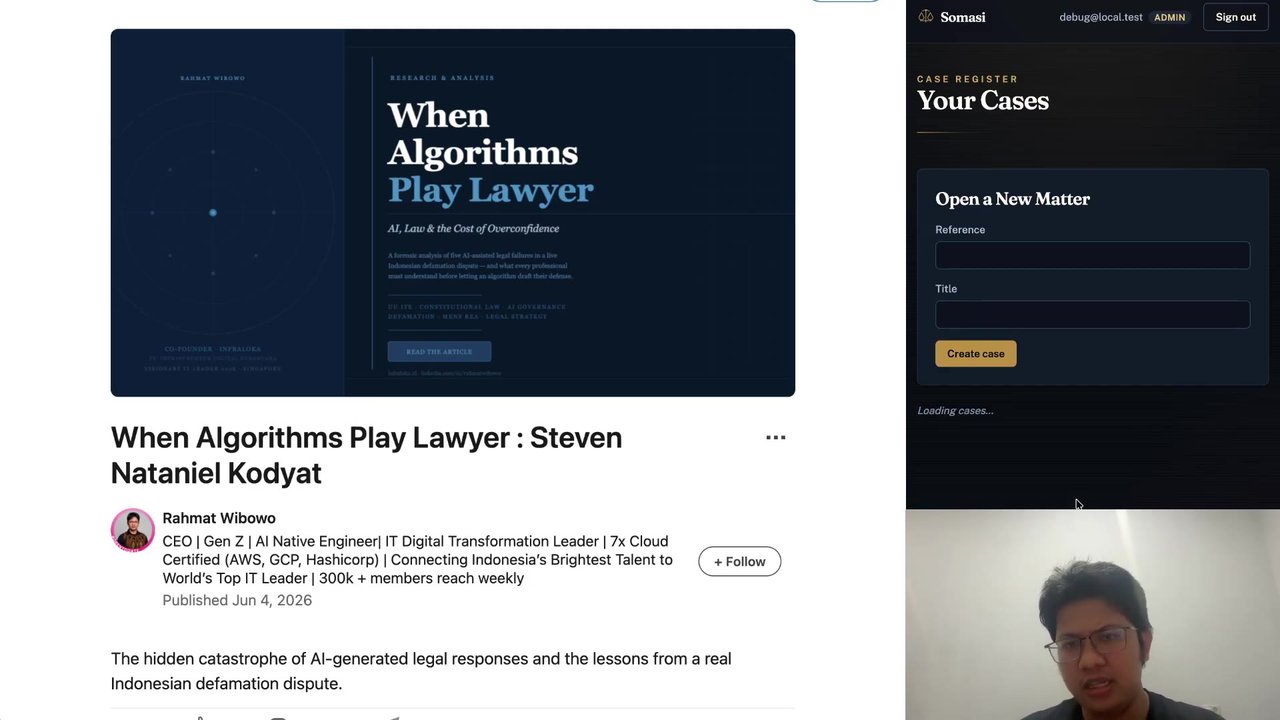
Transcript
[YouTube video, "When Algorithms Play Lawyer : Rahmat Wibowo VS Steven
Nataniel Kodyat", 22 July 2026, 13 minutes. Excerpts from YouTube's
automatic captions.]
[0:00] this is a study case of me versus Steven Nataniel Kodyat. Both of us
have a dispute ... this is a real one and this is not for defamation, this
is for the analysis for learning
[6:00] sarkasme dirancang untuk melukai atau merendahkan ya ampun Steven
pasal 433 sudah terbukti ya guys ya.
(sarcasm is designed to hurt or demean, my God, Steven, Article 433 is
already proven, guys.)
[7:00] So he stated that his action is a sarcasm against me ... that's the
mens rea because he deliberately said that it is a sarcasm
Commentary
He published it on YouTube on 22 July 2026. Minute links open the video at that point.